The Archive · a codex of governance & faith
The Doctrine Codex of the Drift Age
A flotilla is only as steady as the hand on its wheel and the creed on its decks. These are the
eight ways the water-born govern themselves and the six ways they answer the sea —
drawn from the ledgers, the sermons, and the quarantine logs the Archivists dried by lamplight. Each
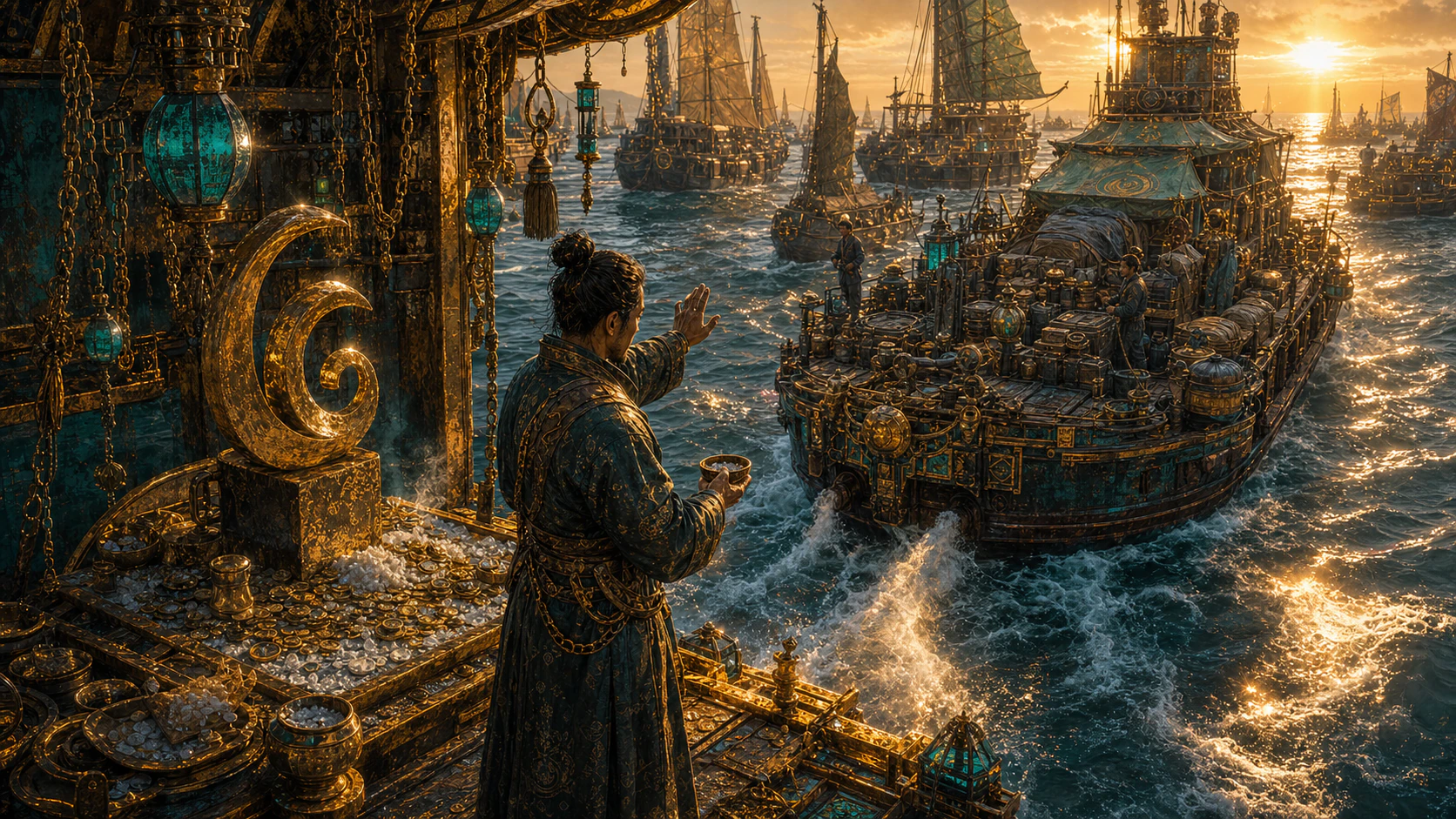
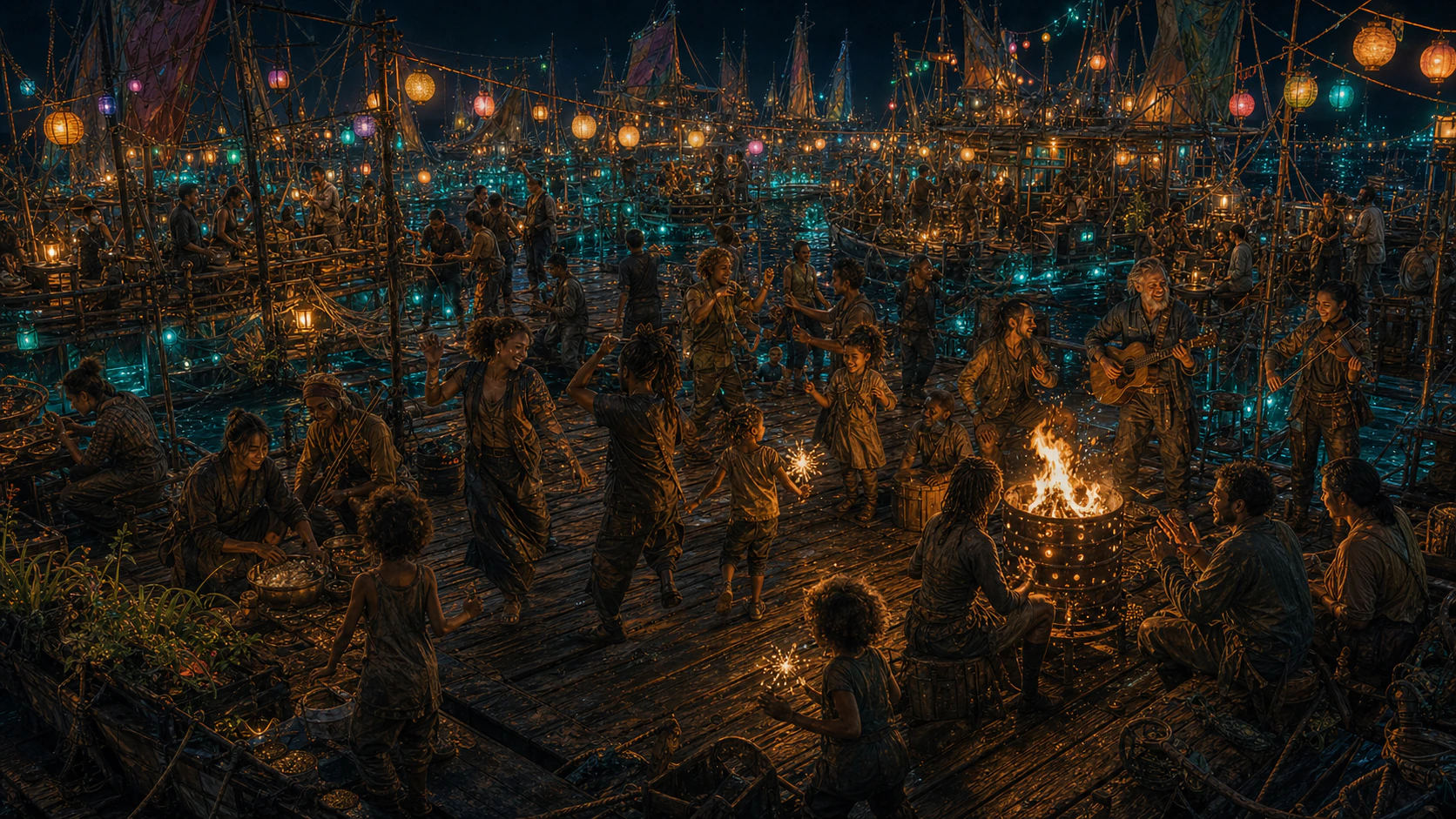
entry carries the plate and the sigil the Archive keeps on file for it.
Part I · Eight hands on the wheel
The Governments
No flotilla runs itself. Power out here has to sit somewhere — in a council, a bloodline, a
board of engineers, a mob, or a strongman's fist — and where it sits decides whether the city sprints,
whether it sails a straight war-course, and how it treats the people held below its decks.
Government · Standing Councils
Federalist
Slow, sure, and impossible to seize from anyone in particular.
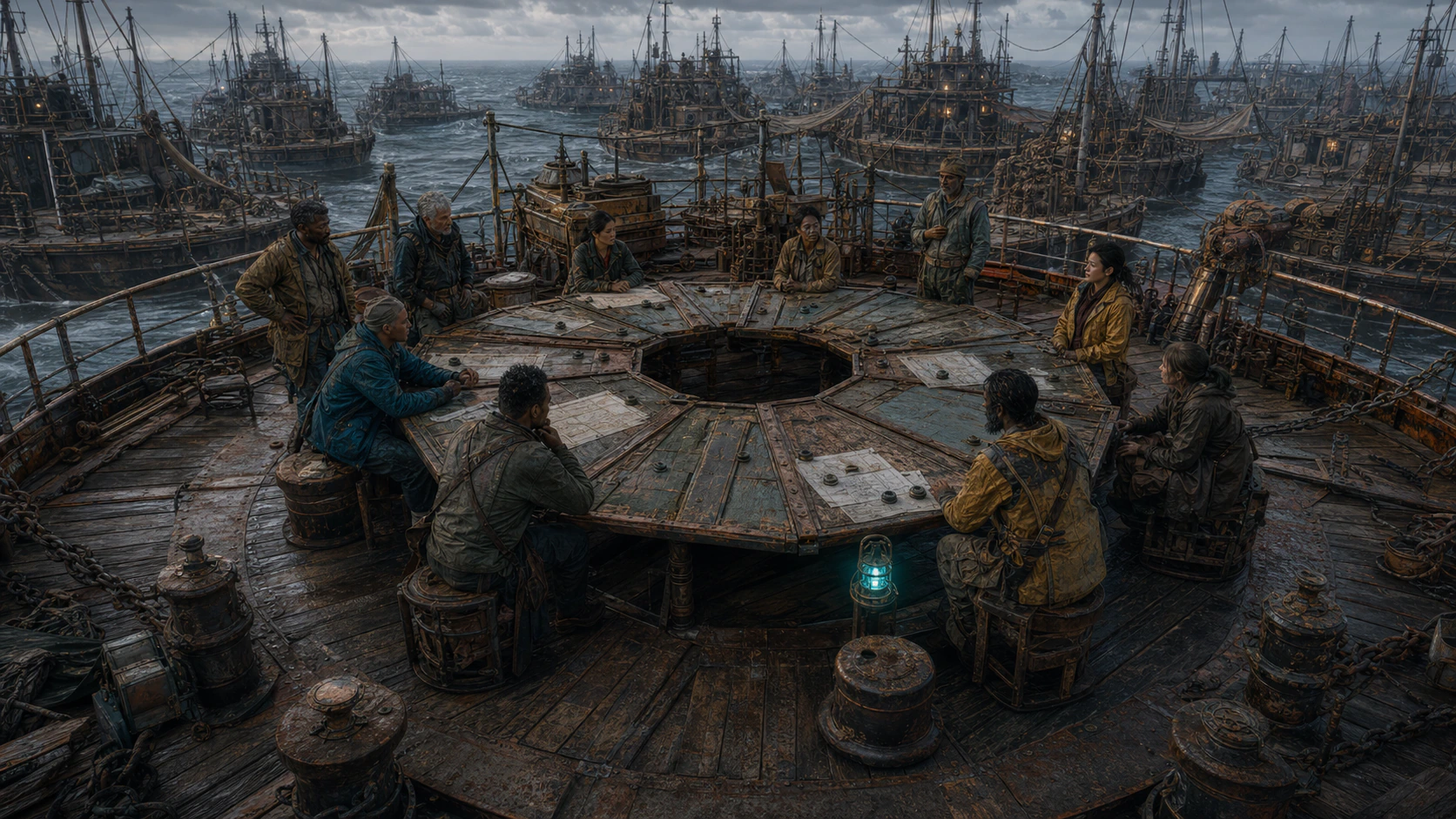
The oldest way the fleets govern themselves, and the one rulers reach for when they want to still be here in ten Foundings. A federalist flotilla is run by standing councils — one to a deck, each sending a voice up the chain until the whole city speaks with something like agreement. Nothing moves fast. A federalist deck will debate the placement of a single cistern the way the drowned age argued treaties, and by the time the vote is counted the tide has usually settled the matter itself.
But nothing breaks, either. Power sits nowhere you can point to, which is precisely why it can be seized from nowhere you can point to. The commander who inherits a federalist city complains they cannot make it run; the commander who has watched a junta tear itself apart at the seams understands exactly why the councils were built to be boring. There is no glory in it and no catastrophe in it — only the long, grinding competence of a city that has decided, above all, to keep floating.
The councils keep no special love for cruelty and no special mercy. A prisoner's fate is a line item like any other — argued, minuted, filed. It is the government you steer by in fair weather, and the first one you abandon the morning the guns actually come.
Income —
Muster —
Morale —
Births —
The unfree indifferent
Doctrine neutral baseline
Government · Elected Stewards
Republic
The ledger votes, and the ledger favours a fair harbour.
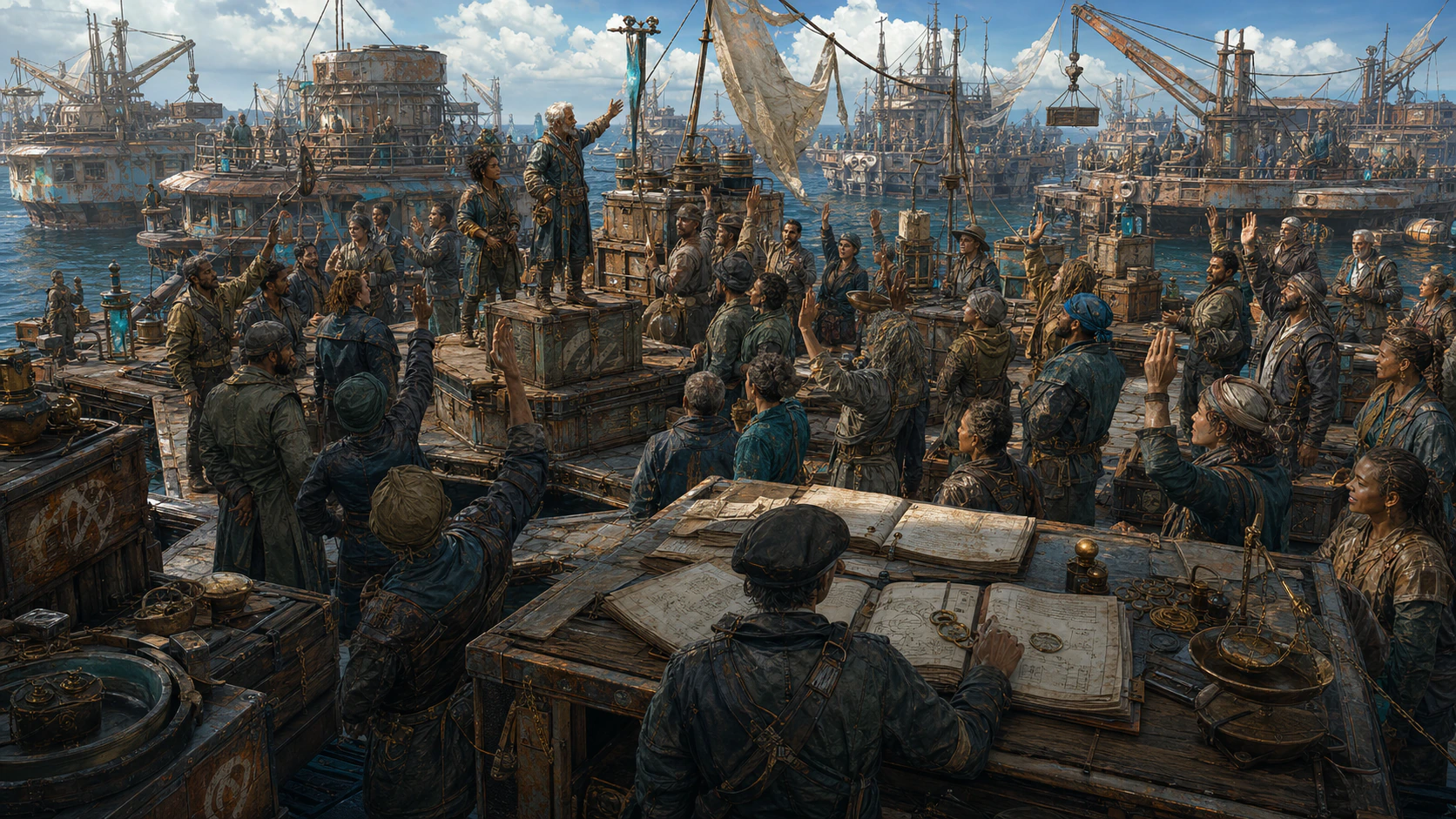
Where the councils merely endure, a Republic is built to deal. Its stewards stand for election on the promise of a fatter ledger, and mostly they deliver — a republic runs its harbours honest, keeps its tariffs legible, and gets a name up and down the Salt Meridian as a flotilla whose word is worth the ink. Traders route through it. Alliances hold with it. Money, out here, is a kind of gravity, and a republic bends it its way.
The cost is stitched into the same fabric. A city that answers to its voters will not press its people into uniform against their will, so its war-band is always a little thin — a republic buys its safety instead of conscripting it, and prays the market never closes on the day it needs a fleet. Its rulers are forever explaining to hungrier neighbours that a smaller army is a choice, not a weakness. Sometimes the neighbours believe them.
A republic's citizens will not stand for cruelty done in their name, and they say so at the ballot: starve a hold of prisoners and the morale of the free decks turns on you as surely as any storm. Mercy here is not sentiment. It is policy, and it is popular.
Income +3%
Muster −5%
Morale —
The unfree decries cruelty
Government · The Shared Deck
Collective
No hold goes hungry while the next deck feasts.
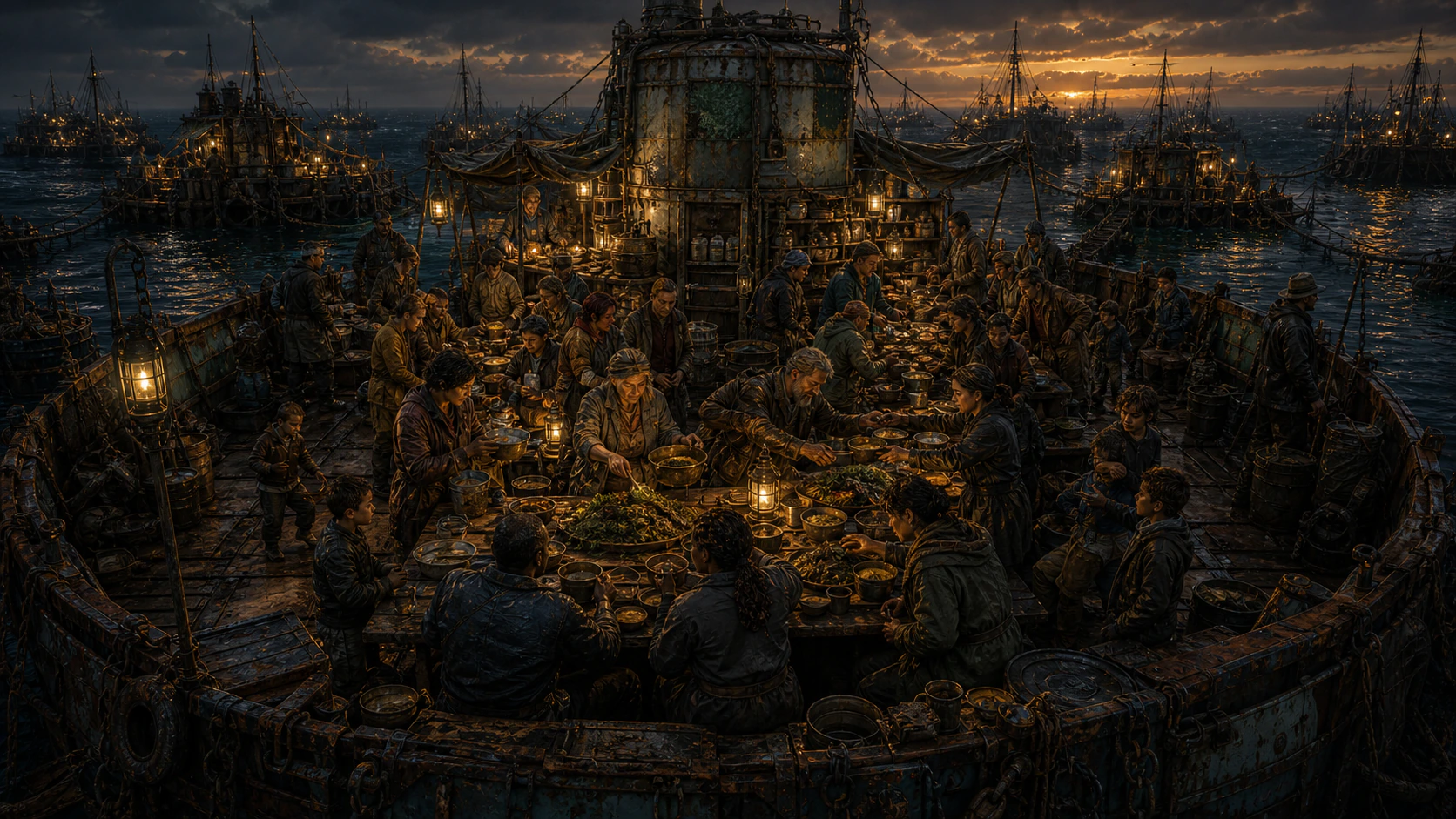
A Collective holds one article above all others: the flotilla is a single hull, and a single hull shares its water. Rations are pooled and portioned, births are welcomed as the city's wealth rather than a household's burden, and the misery that gnaws at more divided decks — the resentment of the have-not for the have — simply has less to feed on. A collective is a content place. Its people stand closer together, and a city that stands together grows.
Prosperity of the individual sort is the price. Sharing everything means no one accumulates the way a free port's merchants do; the ledger runs a touch thin because the ledger was never the point. A collective measures itself in full cradles and quiet decks, not in salt in the strongbox — and its rulers, if they are honest, admit that the arrangement runs on a fragile, precious thing called trust, and that trust does not survive a famine.
Cruelty to the unfree sits badly with a people who have built their whole order on not letting anyone go without. A collective frowns on starving its captives — not from law, but from the plain instinct of a deck that shares its bread.
Income −4%
Morale +2
Births +10%
The unfree frowns on cruelty
Government · The Fist
Salvage Junta
When the guns must come first, and everything else can wait.
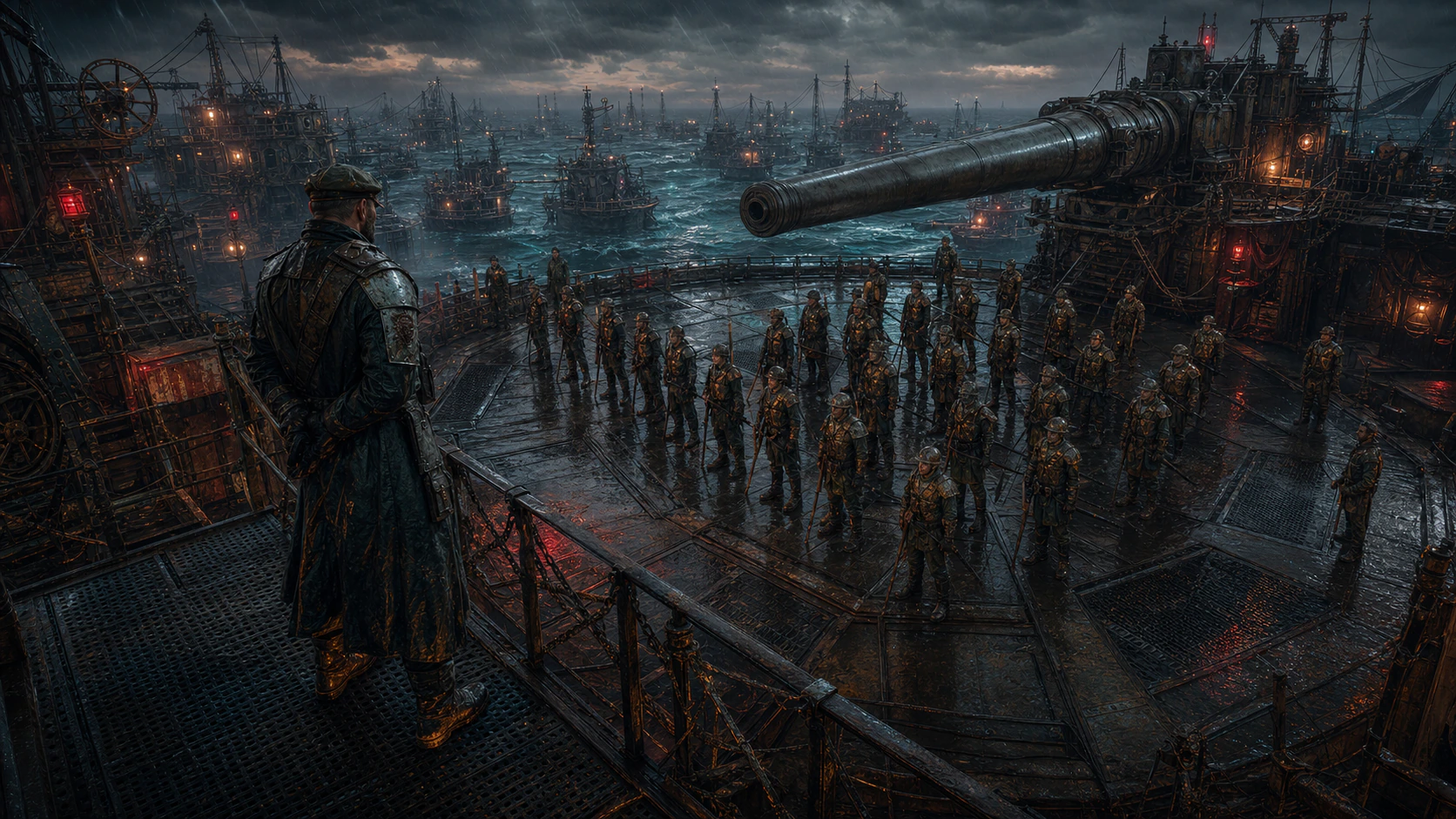
A Salvage Junta is what a flotilla becomes when it decides that survival is a military problem and nothing else. A commander — or a knot of hard officers behind one — takes the wheel, dissolves the councils, and puts the whole city on a war-footing: every able hand a potential rifle, every deck a barracks, every tide a drill. No government afloat can raise Marines like a junta. It is built, root and rivet, to fight.
It is also built to grind its own people down. Rule by the fist is rule by fear, and fear is a tax the decks pay in morale every single tide; a junta's citizens are safer than most and unhappier than nearly all, and the ledger sags because a city drilling for war is a city not out earning. Held at peace, with no enemy to justify the boots on the deck, the resentment festers — the garrison chafes, and a junta that forgets to find a war eventually becomes one for its own people.
Toward the unfree a junta is frank: a prisoner is a resource, and a resource does not have feelings the state is required to consult. Its people, hardened by their own hard rule, do not flinch at tight rations for the captured — some of them approve.
Muster +40%
Morale −2
Income −2%
The unfree welcomes harshness
Peace breeds unrest
Government · Anything Sells
Free Port
Order is somebody else's problem. Bring salt.
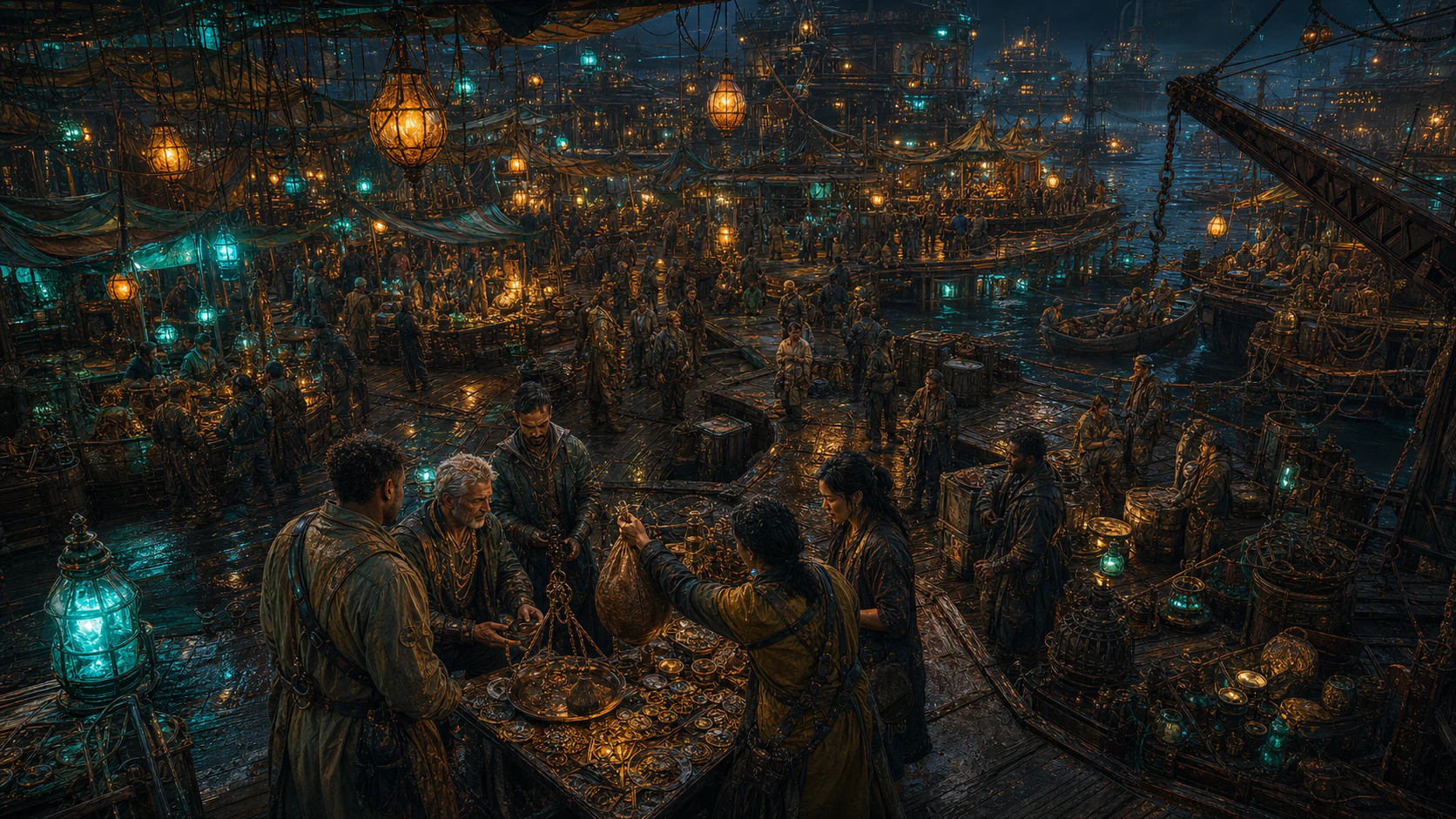
A Free Port is the richest deck on the water and the last one you'd want to be stranded on after dark. It keeps almost no law but the law of the sale: anything moves here, to anyone, for the right weight of salt, and the harbour master's only real duty is to make sure the wharf fees clear. Money pours in. So does everyone who has somewhere to launder a fortune or something they can't sell anywhere honest.
What a free port cannot do is hold a line. A city that conscripts nobody and trusts everybody's coin defends itself thinly and reluctantly — its war-band is a rumour, its garrison a handful of paid guns, and its people, cheerfully lawless, are hard to rouse to anyone's banner but their own profit. And a free port at war is a contradiction its own decks resent: the wharves stay open, the merchants stay rich, and the front bleeds — laissez-faire profiteering while the guns are out reads, even to a free port, as a kind of theft.
Captives here are simply cargo, priced and listed, and few merchants trouble their conscience over the manifest. It is the government of appetite: brilliant in fair weather, faithless in foul.
Income +4%
Morale −2
Muster −10%
The unfree cargo, not people
War breeds unrest
Government · The Enginehall
Technocracy
The people who keep the city afloat should be the people who steer it.
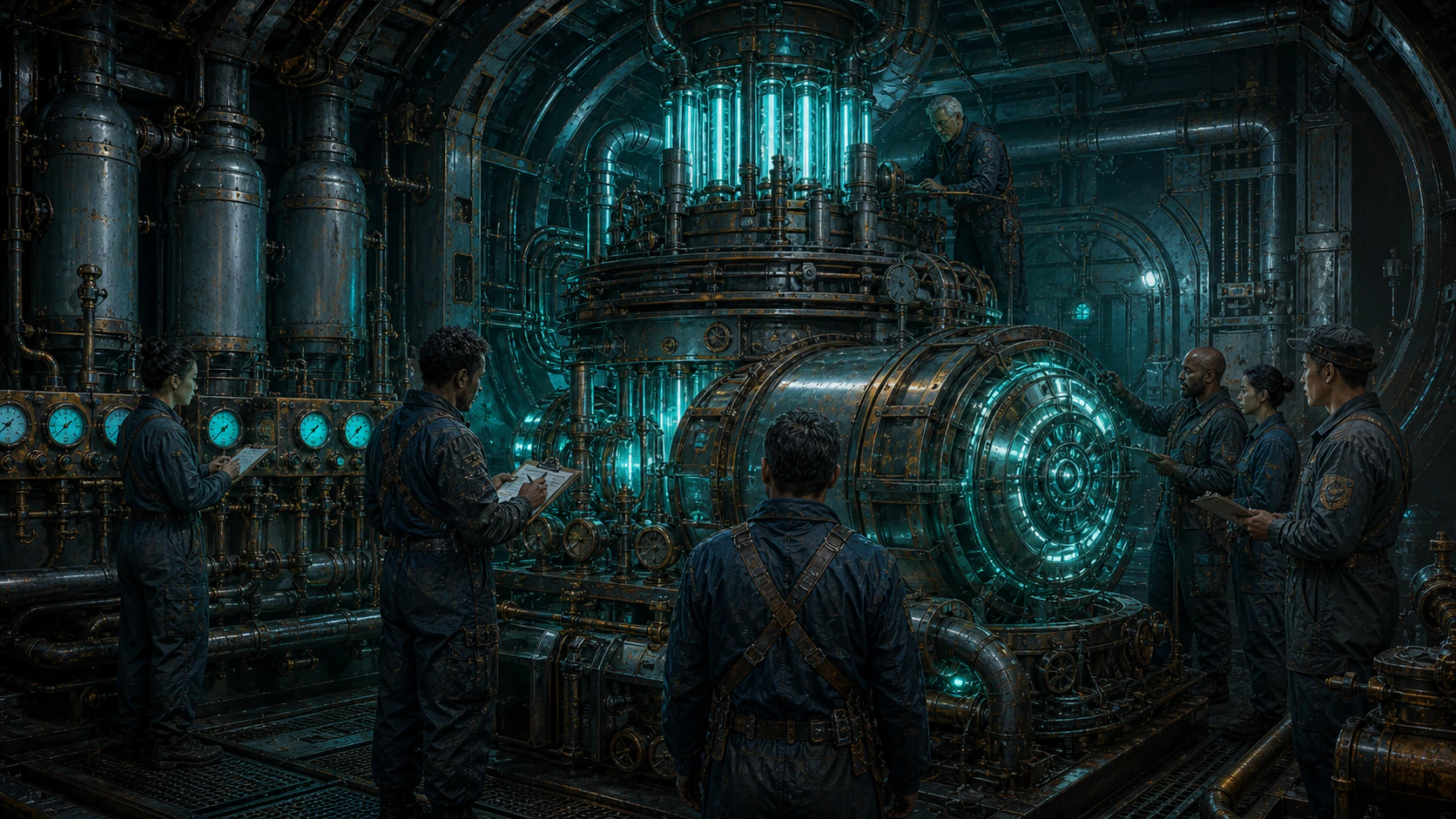
Every flotilla lives one failed pump away from the bottom, and a Technocracy takes the obvious lesson to its conclusion: hand the wheel to the engineers who actually keep the hull dry. Rule falls to the Enginehall — a board of desalination masters, structural riggers, and salvage-metallurgists who govern the way they'd tune a reactor: by measurement, by margin, by the cold logic of what works. And it does work. A technocratic city is efficient past the point of comfort, its ledger tidy, its people well-served by a competence that never sleeps.
It is also a little airless. The Enginehall optimises the flotilla like a machine, and a machine has no use for what it cannot schedule — least of all children, who are inefficiencies with names. Its people are professionals first and families a distant second, so its cradles run thin and its numbers grow slowly. And engineers make poor warlords; a city that solves problems with the right tool struggles to solve one with a rifle, and its muster is meagre. The Enginehall would rather redesign the threat than fight it.
Toward the unfree it is pragmatic and mildly humane — not from tenderness, but because a board that thinks in systems knows a starved, brutalised labourer is a badly maintained one.
Income +3%
Morale +1
Muster −10%
Births −8%
The unfree maintained, not abused
Government · Hereditary Fleet Command
The Admiralty
Order that is loved is stronger than order that is feared.
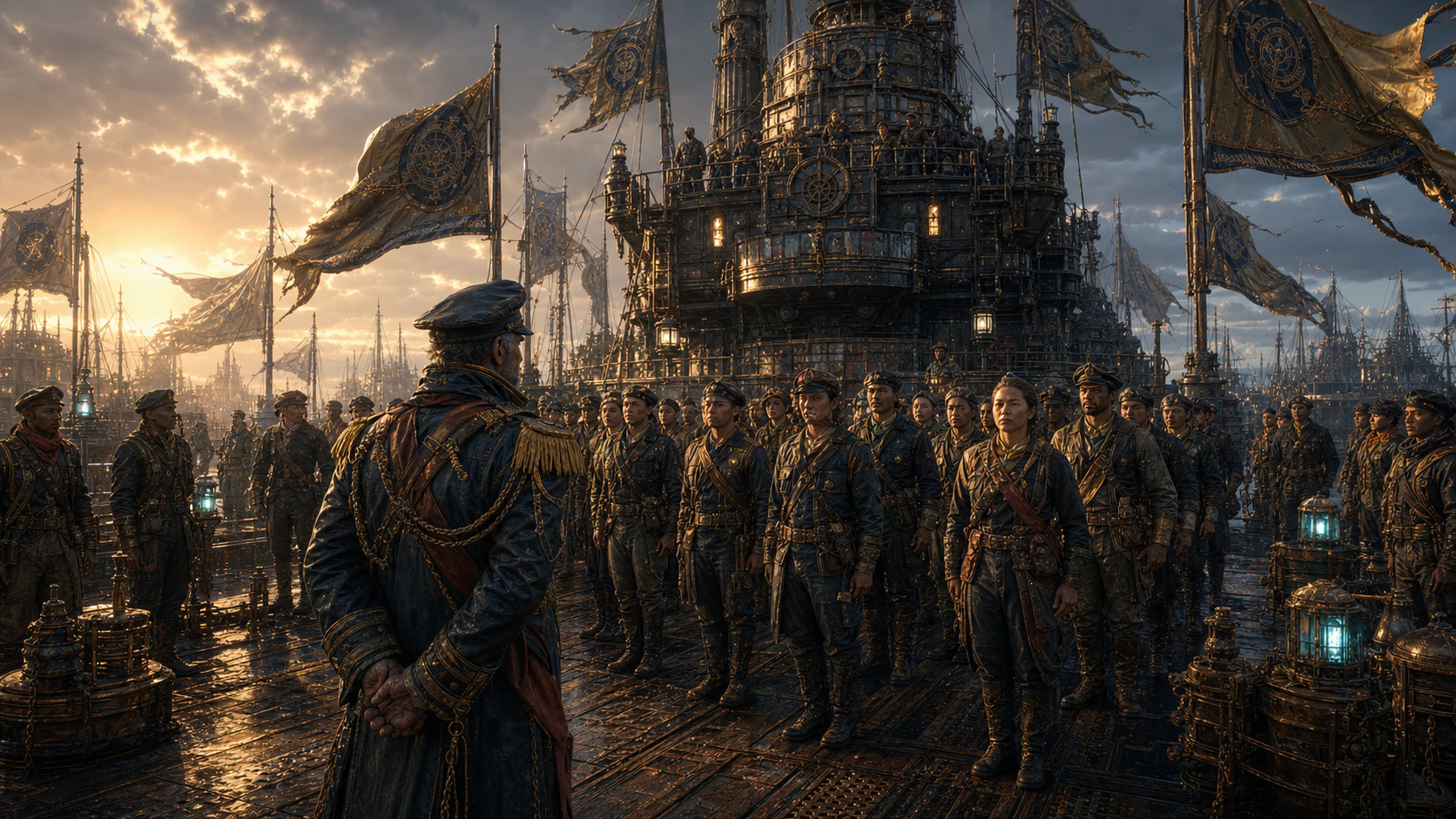
Where a junta rules by the fist, The Admiralty rules by the flag — and the difference is everything. It is a line of hereditary fleet-commanders, admiral to admiral, whose legitimacy the decks simply accept the way the tide is accepted: as the settled order of things. There is ceremony here, and pride, and a genuine, unforced loyalty. When an Admiralty calls its people to muster, they come gladly and in number, because they are answering their own commander, not a stranger's boot. Its cradles are full; its morale runs high; its levies are the envy of harder governments.
The rot is quieter and just as real. A hereditary court runs on patronage — sinecures for cousins, comfortable posts for the loyal, a hundred small hands in the treasury — and the ledger bleeds through a thousand honourable little leaks. An Admiralty is never poor exactly, but it is never as rich as it should be, and reformers who try to close the leaks discover that the leaks are, in fact, the loyalty. You cannot have the one without the other.
Toward the unfree the Admiralty is disciplined rather than cruel: order comes before mercy, a prisoner is a matter of protocol, and protocol is not sentimental.
Morale +2
Muster +8%
Births +3%
Income −4% (patronage)
The unfree order over mercy
Government · No Captain But the Current
Drift Commune
The freest decks on the water, and the hardest to save.
A Drift Commune answers to nobody. There is no council, no admiral, no board — only the decks themselves, each doing as it judges best, bound by nothing firmer than habit and goodwill and the shared understanding that the sea is captain enough. And the people love it. Freed of levies, conscription, and the long shadow of any strongman, a commune's decks are the happiest afloat; families grow without a state to ask permission of, and a visitor from a junta walks its walkways half-disbelieving that a city can run this loose and still be a city at all.
It cannot, quite, when the water turns hard. Nobody keeps the common treasury because there is no common treasury to keep; nobody musters the fleet because mustering is exactly the kind of coercion the commune exists to refuse. A drift commune is broke and nearly defenceless by design, and its rulers — such as they are — spend their days persuading rather than commanding, and losing the argument whenever the argument is fight or die. It survives by being too poor to bother raiding and too beloved to fracture from within.
On one thing a commune will not bend: it abhors the holding and mistreatment of the unfree. A city that made liberty its only law does not stomach a chained deck, and says so loudly.
Morale +3
Births +5%
Income −6%
Muster −15%
The unfree abhors chains
Part II · Six answers to the sea
The Faiths
The land faiths crossed the drowning with the survivors and kept their gods; you will find their
chapels on half the decks afloat. The water faiths are younger and stranger, born out here from
people for whom the sea is not scenery but law. A flotilla's creed shapes its health, its
harvest, its fear of the beast in the deep — and how gently it treats the souls it holds below.
Faith · The Ledger and the Gun
Secular
No god ever pumped a bilge.
Many decks keep no faith at all, and are not ashamed of it. A Secular flotilla trusts what it can measure — the ledger, the gun, the gauge on the desalination stack — and treats the sea as a fact rather than a face. When the water rose it drowned the temples along with everything else, a secular commander will remind you, and the people who lived were the ones who stopped praying and started bailing.
There is no bonus here and no penalty; a secular city carries neither a creed's gifts nor its burdens. What it carries instead is clarity. Freed of the demands a faith makes — the fasts, the reverences, the congregation's opinion on the harpoon — a secular ruler decides purely on the merits, and answers to no altar for it. Some find that cold. Others find it the only honest way to run a machine that will starve in a week if the sums are wrong.
The sea, of course, does not care whether you believe in it. It takes its toll from the faithful and the faithless in exactly equal measure — which is either proof there is nothing down there to pray to, or proof it is beyond flattery. A secular deck is content not to find out.
All levers neutral
The unfree indifferent
Doctrine no faith bonuses or costs
Faith · The Craftsman's Sea
Tidewright
Everything it takes from you, it takes the way a shipwright strips rot from a hull.
The Tidewrights preach a patient, unsettling mercy: the ocean is not a monster and not a god but a craftsman, and its work — even the cruel-looking parts — is the work of a maker improving the vessel. Ask a tidewright why a plague took the weak or why the beast in the deep water deserves reverence, and you will get a calm sermon about tools and hands, about the wisdom of the shipwright who cuts away the rotten plank so the sound hull can sail. It is a creed of order, care, and unhurried competence, and it makes for extraordinary flotillas: clean, healthy decks, a productive people, an infirmary that actually heals.
That patience has an edge the war-hungry resent. Tidewrights hold that a hand raised to muster is a hand not raised to build, so their levies run lean and their instinct in any crisis is to mend rather than march. A tidewright city fields fewer Marines and loses fewer people to its own violence, and considers that a fair trade the way a shipwright considers a slow, sound repair fairer than a fast, brittle one.
They will not abide cruelty to the unfree. A prisoner is a plank the sea has not finished with, and you do not take an axe to the shipwright's own hand — a tidewright crew mourns such cruelty, and a tidewright commander pays for it in the mood of the congregation.
Health +4
Income +2%
Morale +1
Muster −5%
The unfree decries cruelty
Leviathan reveres · mourns the hunt
Faith · Salt Is Scripture
Saltborn
The sea unmade the Age Before to make a truer one. Suffering is the sermon.
Saltborn preaches that the Drowning was not a catastrophe but a correction — that the sea rose to scour away a soft, rotten age and forge, from the survivors, a harder and truer people. To a saltborn congregation, salt is not seasoning but scripture; hardship is not misfortune but the whole point; and comfort is the thing the water was sent to destroy. It is a warrior's creed, born from people who decided that if the sea meant to test them, they would answer by being worth the test.
No faith raises fighters like the Saltborn. Its people volunteer for the war-band as an act of devotion, and a saltborn muster comes fast, deep, and unafraid — death holds little terror for a congregation taught that the sea already killed the world once and found the strong. But the same austerity that steels the spirit wears down the body: saltborn decks refuse the softness of good rations and full infirmaries, and their people are hardy, unhappy, and a little worn. Joy is suspect. Ease is a slow drowning.
Toward captives the Saltborn are fearless and unsentimental — a prisoner who suffers is merely learning the same lesson the sea teaches everyone, and a saltborn deck feels no guilt in the teaching. Some hold it a kindness.
Muster +20%
Health −3
Morale −1
The unfree harsher, fearless
Faith · Owe It Nothing
Deepwake
Whatever waits below is owed nothing, and the whole art of living is to keep it that way.
The Deepwake keep the darkest and quietest creed on the water. They do not deny that something enormous moves through the deep water — they have seen the swell flatten to glass and the shadow slide beneath the hull — but where the Tidewrights revere it, the Deepwake hold the opposite article: whatever is down there is owed nothing, and the entire discipline of a good life is to sail quiet, take little, and settle every account before the dark can call one in. Theirs is a faith of restraint dressed as mysticism, and it breeds a strange, otherworldly contentment — Deepwake decks are calm, fertile places, full of children and unhurried people who move as though listening to something the rest of the fleet cannot hear.
That serenity comes at the cost of ambition. A people taught to take little from the deep take little from anything; the Deepwake do not chase the fat ledger or the great salvage haul, and their income runs thin because reaching for more is, to them, a way of running up a debt with something that always collects. They would rather owe the dark nothing than owe it a grudge.
Toward the unfree the Deepwake are neither cruel nor kind but simply elsewhere — captives, like most worldly things, are beneath the attention of a congregation whose gaze is fixed on the trench.
Births +15%
Morale +2
Income −2%
The unfree indifferent
Leviathan owes nothing · dreads the grudge
Faith · Fortune Favours the Wake
Gilded Wake
A rich ship leaves a bright wake, and fortune follows the bright.
The Gilded Wake is the youngest of the water-faiths and the most frankly worldly: it holds that fortune is real, that it moves like a current, and that it gathers behind the flotilla bold and lucky enough to run ahead of it. Its congregations do not pray for salvation so much as for a good crossing and a fat manifest — they read luck in the froth of a wake the way older faiths read the sky, keep shrines gilded with the first salt of every profitable voyage, and treat a shrewd trade as a kind of devotion. Where the drowned age had merchants, the Gilded Wake has made a priesthood of them.
It is, unsurprisingly, a faith that pays. A gilded flotilla's ledger runs bright — commerce is holy work here, and holy work is done well and often. But fortune's faith has fortune's blind spots: a congregation that reveres the lucky and the rich has little use for the martial or the self-sacrificing, and its muster runs thin, since dying for a banner is a poor return on a life. The Gilded Wake would rather buy the war off, or outrun it.
Toward the unfree it is coolly transactional. A captive is an entry on the manifest, an asset like any other, and the faith that made commerce sacred sees no scripture broken in trading a soul as cargo.
Income +4%
Muster −5%
The unfree cynical · cargo
Faith · Joy Is the Only Tribute
Sunwake
The sea took everything else. It will not have our gladness too.
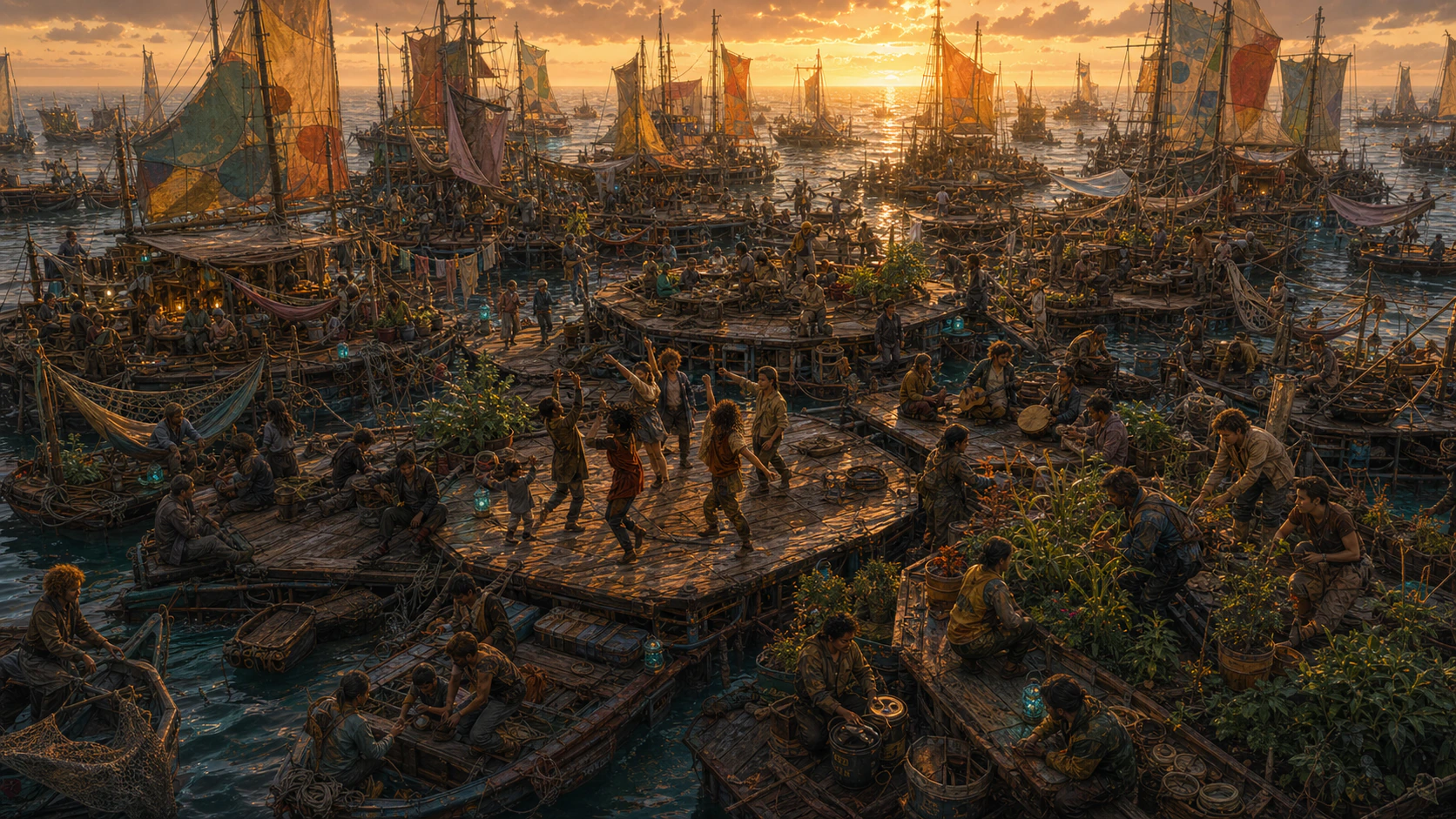
Against a world of grey water and hard creeds, the Sunwake make a defiant bet: that the only tribute the sea truly accepts is joy, and that a people who keep dancing on the drowned world's grave have already won the only victory that matters. Theirs is a festival faith — the decks strung with lamps, the calendar a chain of feasts, the congregation loud and bright and unashamed of pleasure in an age that treats pleasure as a leak. A Sunwake flotilla is the happiest water you will ever sail into, and its cradles are full, because joy, it turns out, is fertile.
The bet has a bill. A people devoted to festival are a people who feast when they should ration and dance when they should drill; Sunwake decks run softer of body and thinner of discipline, their infirmaries busier with the costs of indulgence, their muster small and slow because a congregation that loves life this much is reluctant to spend it on a war. The stern faiths call them decadent. The Sunwake call the stern faiths already drowned, and too proud to admit it.
Toward the unfree the Sunwake are gentle almost to a fault: a joyful people cannot square their whole creed with a chained and starving deck, and a Sunwake congregation turns cold on a commander who dims the festival with cruelty.
Morale +3
Births +5%
Health −2
Muster −10%
Income −1%
The unfree dislikes cruelty